
Room By Room
Small Living Room Decorating Ideas That Actually Move the Needle (And a Few That Don’t)

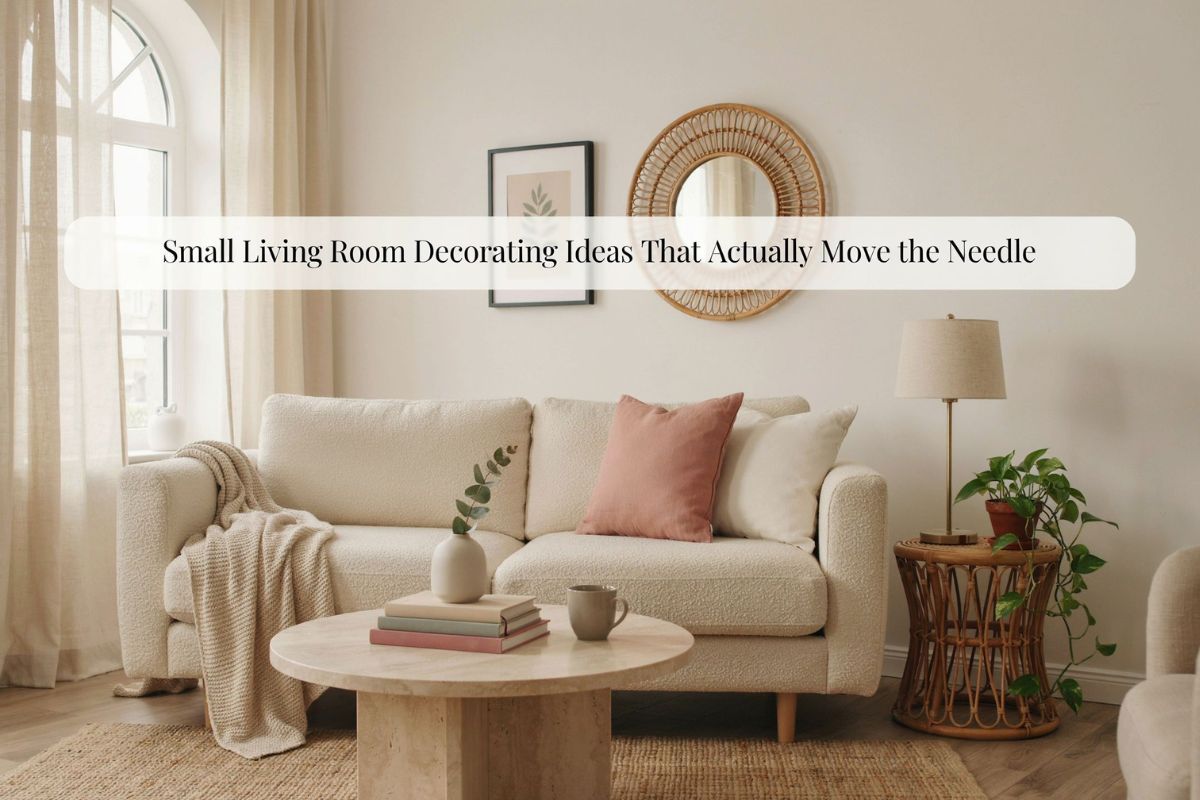
Small living room decorating ideas get treated like a checklist: add a mirror, buy a light rug, pick a pale paint color, done.
Most of that advice is not wrong, but it is not ranked, either, and in a small room ranking matters. Some choices genuinely change how the room feels the moment you make them. Others are decorating filler that looks fine in a photo and does nothing for the actual square footage.
Here is the difference, starting with the one thing almost every small living room gets wrong before anyone even talks about furniture.
Get the Rug Size Right Before You Touch Anything Else
As an Amazon Associate, I earn from qualifying purchases. Some of the links in this article are affiliate links. This means that, at zero cost to you, I will earn an affiliate commission if you click through the link and finalize a purchase.
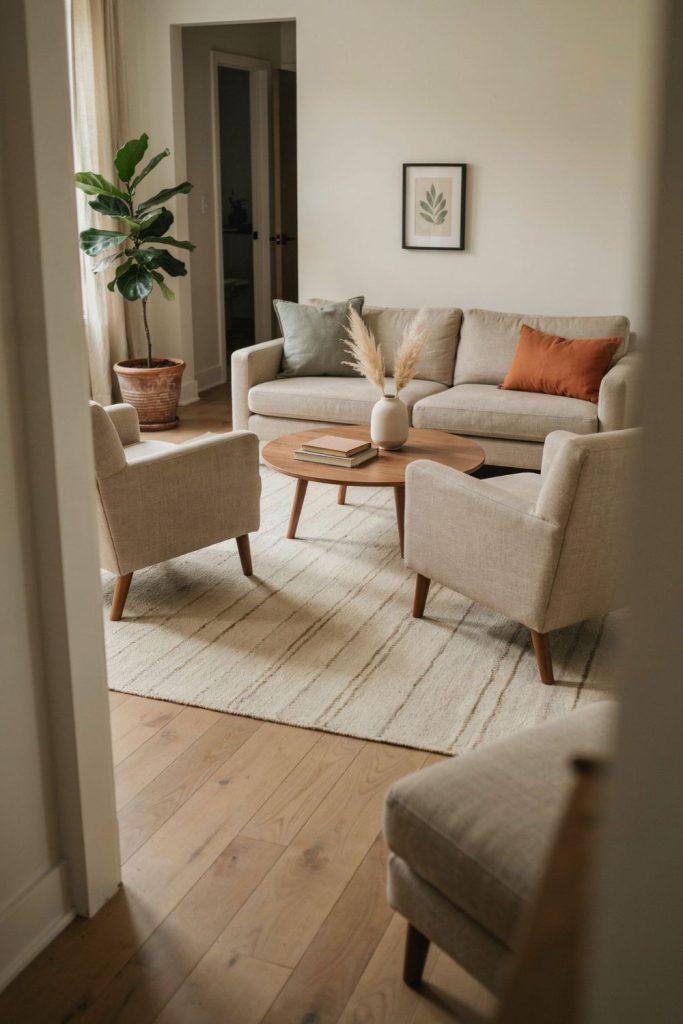
If a small living room feels choppy and disconnected, the rug is usually the first thing to check, and it is rarely the color or pattern. It is the size. A common small space rug mistake is buying something in the five-by-seven range for a room that actually calls for an eight-by-ten, because five-by-seven sounds appropriately modest for a small room.
The opposite is true. A too-small rug creates an island in the middle of the floor with a moat of bare wood around it, which makes the room read smaller, not cozier.
How to Style It:
- Measure your seating layout first, then size the rug to it, not the other way around
- Aim for at least the front legs of every seating piece resting on the rug
- Choose a low pile so the rug does not compete visually with furniture height
- Skip busy, oversized patterns that fight with everything else in a cozy small living room
Shop It: A low-pile wool-blend area rug from Amazon holds up well here because it grounds the room without adding visual bulk.
Furniture That Earns Its Square Footage
Space-saving furniture and multifunctional furniture get lumped together as one idea, but they solve different problems. Space-saving furniture is about physical footprint.
Multifunctional furniture is about how much a single piece does for you. A small living room usually needs both, and most people only think about one.
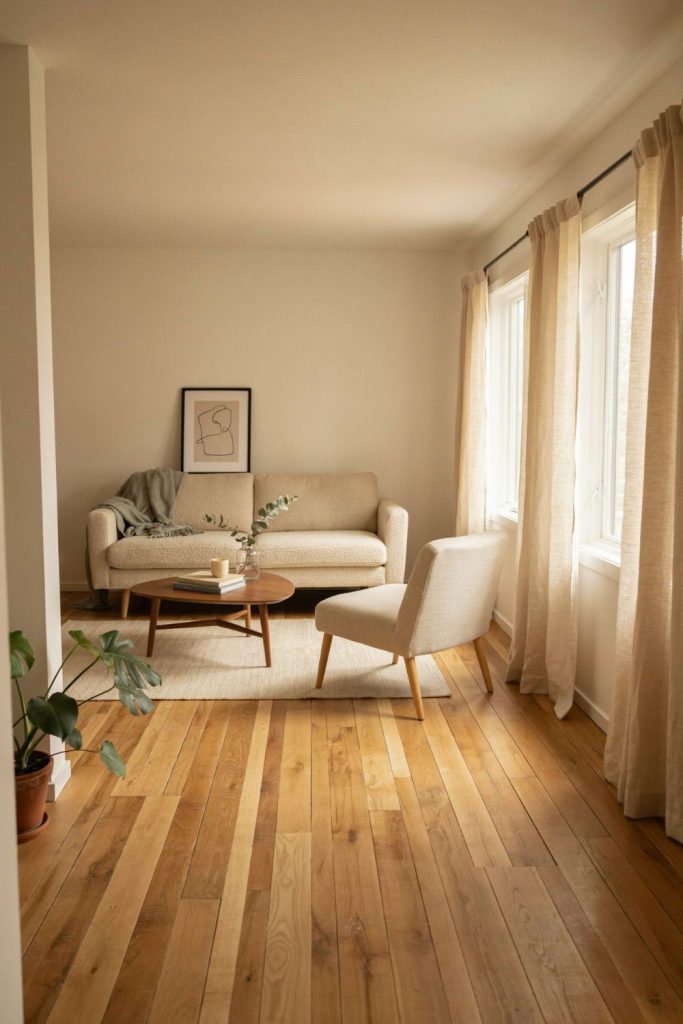
The bigger issue is compact seating arrangements. A deep sectional might be the single worst purchase for a small room, since anything much past 34 inches deep starts eating the room’s actual walking space.
A loveseat or an apartment-sized sofa paired with two lighter chairs almost always outperforms one oversized piece, both in comfort and in how open the room feels.
How to Style It:
- Replace a solid coffee table with nesting tables or a storage ottoman that can flex for guests
- Choose seating no deeper than about 34 inches if the room is under 200 square feet
- Use two lighter chairs instead of one bulky armchair to keep sightlines open
- Pick furniture with visible legs so light passes under it instead of stopping at the floor
Shop It: A set of round nesting tables from Amazon is worth the money since they collapse down to almost nothing when you need the floor space back.
Wall-Mounted Storage That Doesn’t Look Like Storage
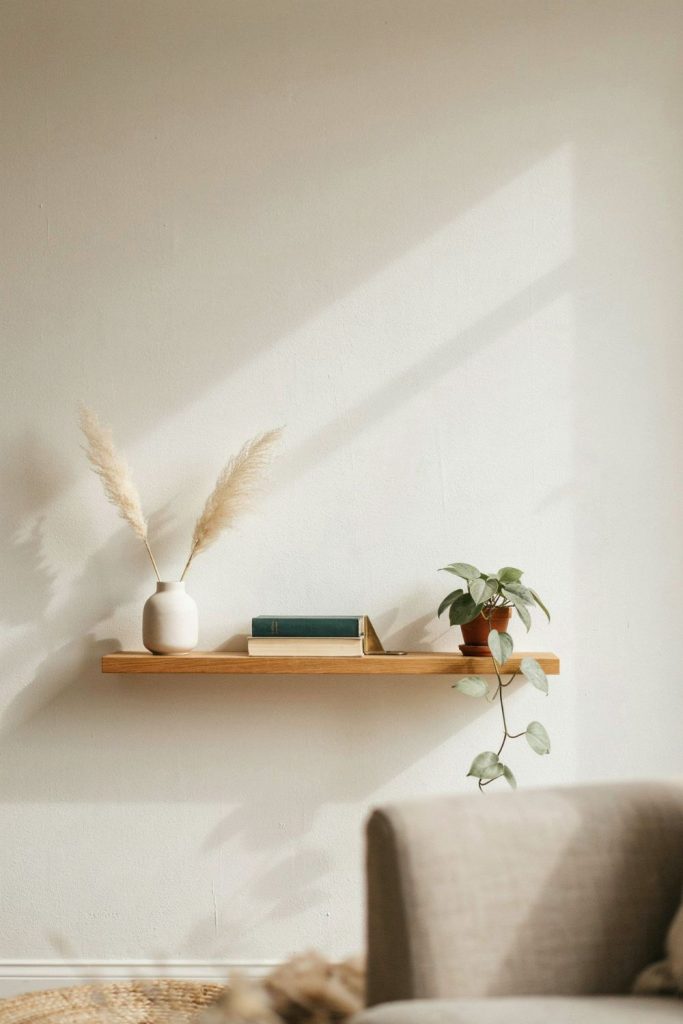
Wall-mounted shelves solve a real problem, floor clutter, but most people install them wrong. Floating shelves that run all the way to the ceiling or stack too close together read as a storage unit rather than decor. The ones that actually look intentional stop well short of the ceiling and leave real breathing room above and below.
How to Style It:
- Leave at least a foot of open wall space above your top shelf
- Use closed baskets on lower shelves to hide the genuinely unattractive stuff
- Install corner shelves in dead space that furniture cannot reach anyway
- Style loosely. Empty space between objects is what makes a shelf feel curated instead of crammed
Shop It: A set of floating wall shelves from Amazon works well because you can rearrange the spacing as your decor changes, rather than committing to fixed cube storage.
Light Does More Than Paint Ever Will
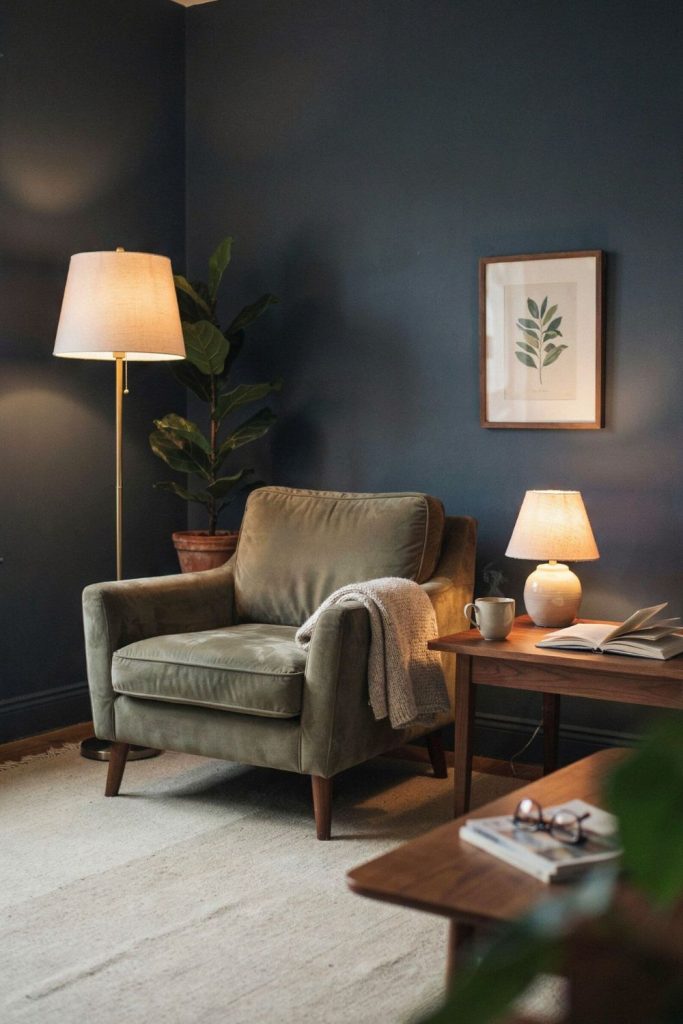
Minimalist decor and light and airy designs get credited to paint color more often than they should be. Paint matters, but small space lighting solutions do more of the actual work. A single overhead fixture creates flat light that makes every corner of a small room look dim and boxed in, regardless of how pale the walls are.
How to Style It:
- Add a floor lamp in whichever corner gets the least natural light
- Layer in a table lamp near seating instead of relying on one central fixture
- Install dimmable bulbs so the room can shift from functional to relaxed without new decor
- Swap heavy drapes for sheer curtains so daylight is not being blocked before it even reaches the room
Shop It: A slim arc floor lamp from Amazon adds real height and light without needing its own floor footprint.
Color and One Accent Wall, Not a Makeover
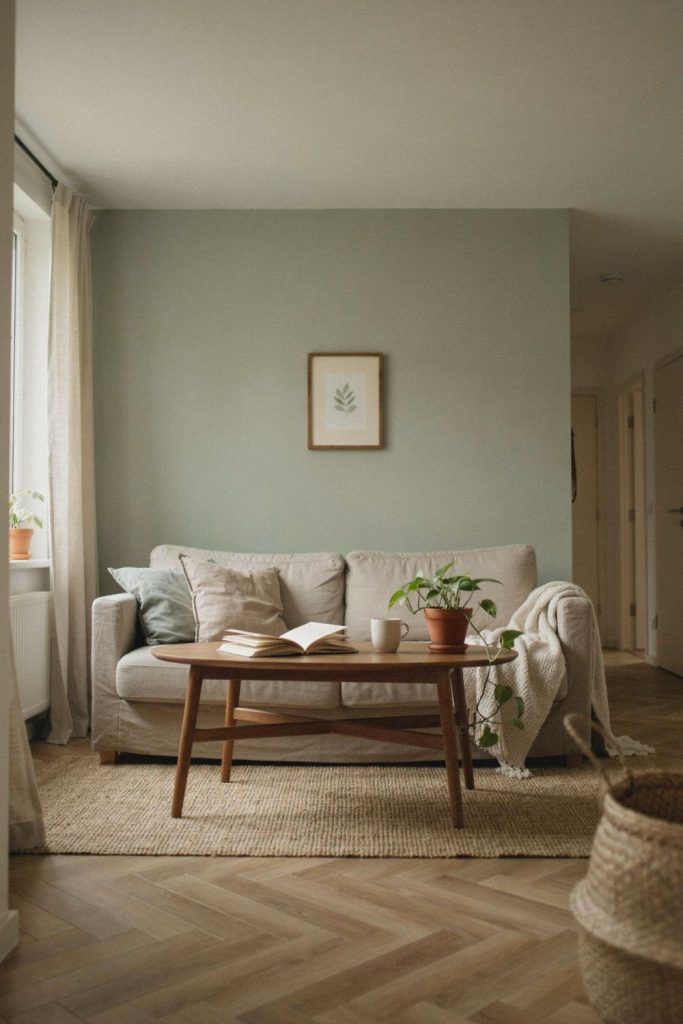
Color schemes for small spaces get oversold as the fix for a cramped room. Neutral tones for small areas help, but color alone will not undo bad furniture placement or a rug that is the wrong size.
Where color genuinely earns its keep is a single accent wall done in a muted, mid-tone shade rather than something dark and dramatic, placed on the wall with the least furniture in front of it.
How to Style It:
- Keep the accent color mid-tone rather than deep or saturated
- Apply it to the wall your seating faces, not the wall behind the seating
- Keep the remaining walls a soft, consistent neutral so the accent has room to stand out
- Use accent colors for small rooms in textiles and art, not in large upholstered pieces
Mirrors: Where They Help and Where They Backfire
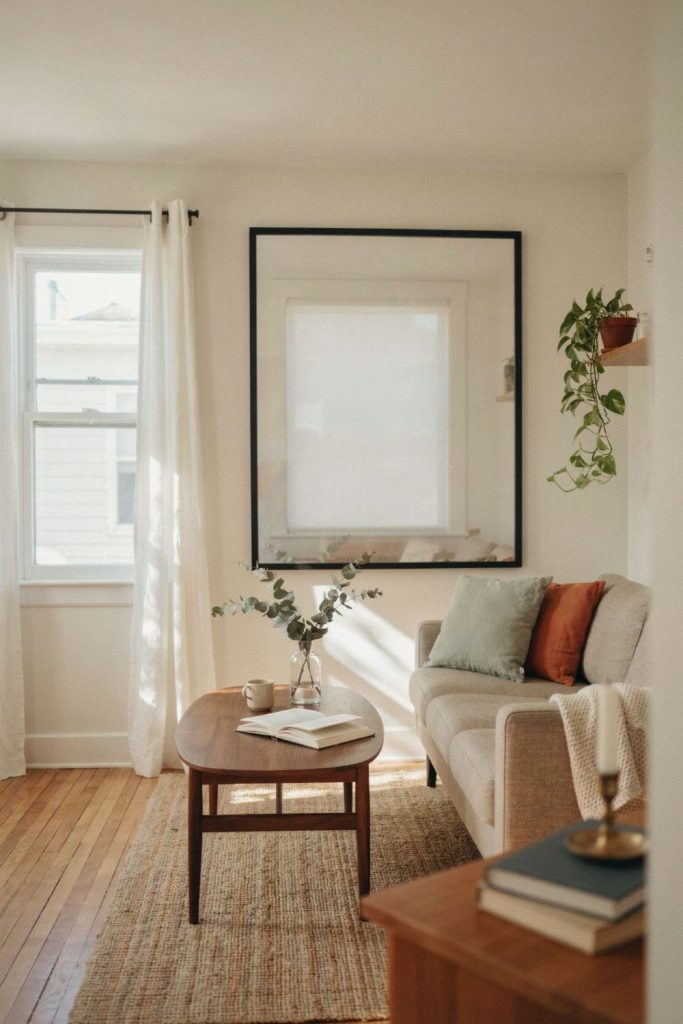
Decorating with mirrors is real, useful advice, and also one of the most misapplied ideas on this list. A mirror only helps if it reflects something worth reflecting, like a window or a lamp. A mirror facing a blank wall or a cluttered corner doubles the clutter instead of the light.
How to Style It:
- Hang your largest mirror directly across from the main window, not on a side wall
- Choose one oversized piece over several small ones for a stronger effect
- Avoid placing a mirror across from a shelf or surface you have not fully styled
- Match the frame finish to existing metal accents so it reads as intentional
Shop It: A round arched floor mirror from Amazon does this well since it adds height and reflected light without needing wall-mounting hardware.
The Open Concept Trick Without Knocking Down a Wall
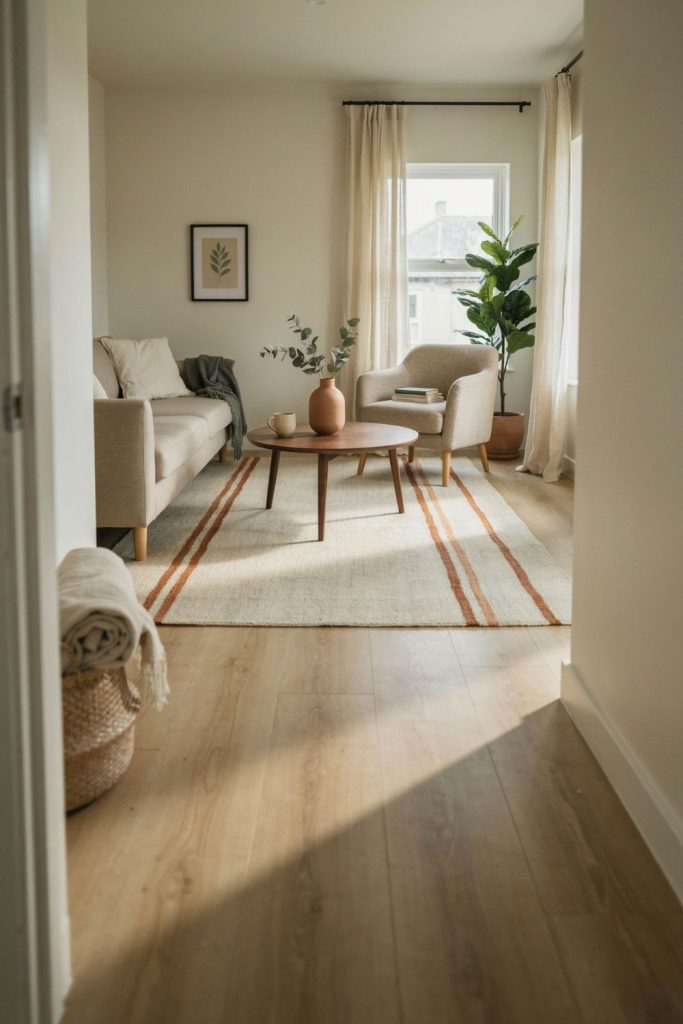
Open concept living made its name in bigger homes, but the visual principle transfers even when your walls are not going anywhere. It comes down to sightlines.
Low-profile furniture, a rug that visually connects two zones, and skipping tall cabinets that chop the room into sections all borrow the same trick that open floor plans use, without any construction involved.
How to Style It:
- Choose furniture that sits lower rather than taller wherever you have the option
- Let one rug or color palette carry across the whole room instead of switching per zone
- Skip tall bookcases that block sightlines from one side of the room to the other
- Keep pathways clear rather than routing traffic around furniture edges
Pick a Style That Actually Suits a Small Room (and Skip the Ones That Fight It)
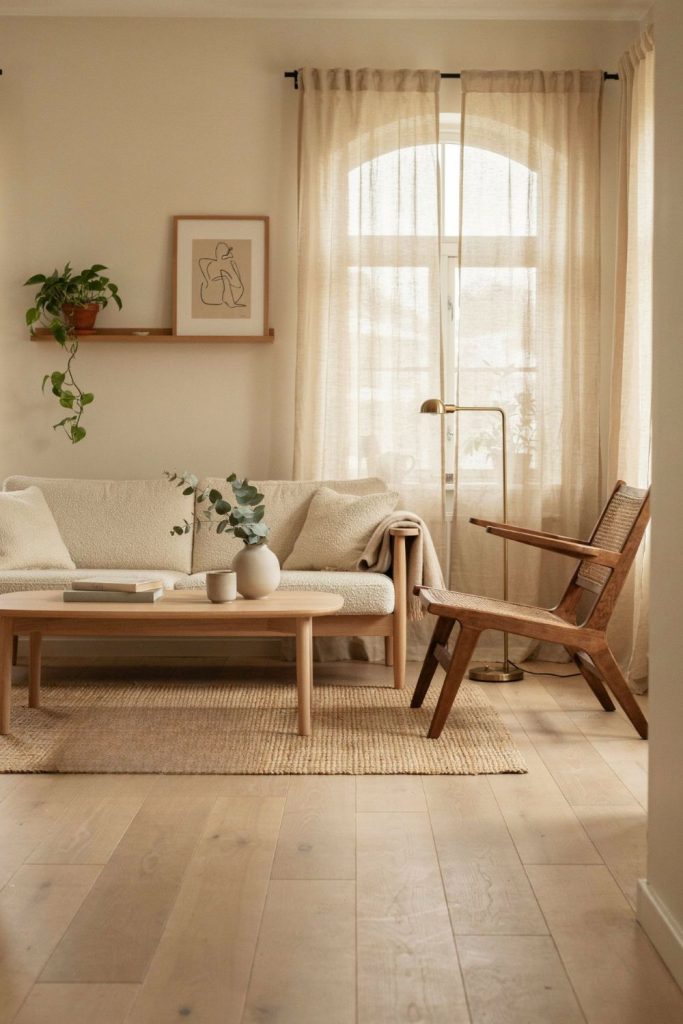
Every design style claims to work in a small space, and that is not entirely honest. Scandinavian style, with its light wood tones and clean lines, is one of the easiest to pull off small because it is built around negative space by default.
Modern small living rooms work for the same reason: low-profile, sleek furniture takes up less visual weight. Rustic small spaces can work too, as long as the wood tones stay warm rather than heavy and chunky.
Bohemian decor, industrial small living rooms, and vintage decor ideas are harder. Bohemian decor tends to rely on layering patterns and objects, which can tip into visual noise fast in a small footprint. Industrial style often leans on large-scale metal fixtures and dark palettes that read heavy in a tight room.
Vintage decor ideas work only when you commit to a small handful of pieces. A room full of antiques will always feel more crowded than a room with two.
How to Style It:
- If you love bohemian decor, borrow it through textiles and rugs rather than furniture and wall art
- If you love industrial style, use it in one fixture, like lighting, instead of throughout the room
- If you love vintage pieces, choose one or two statement items and let everything else stay simple
- Whatever style you land on, keep furniture silhouettes light rather than bulky
What Changes (and What Doesn’t) in a Rental
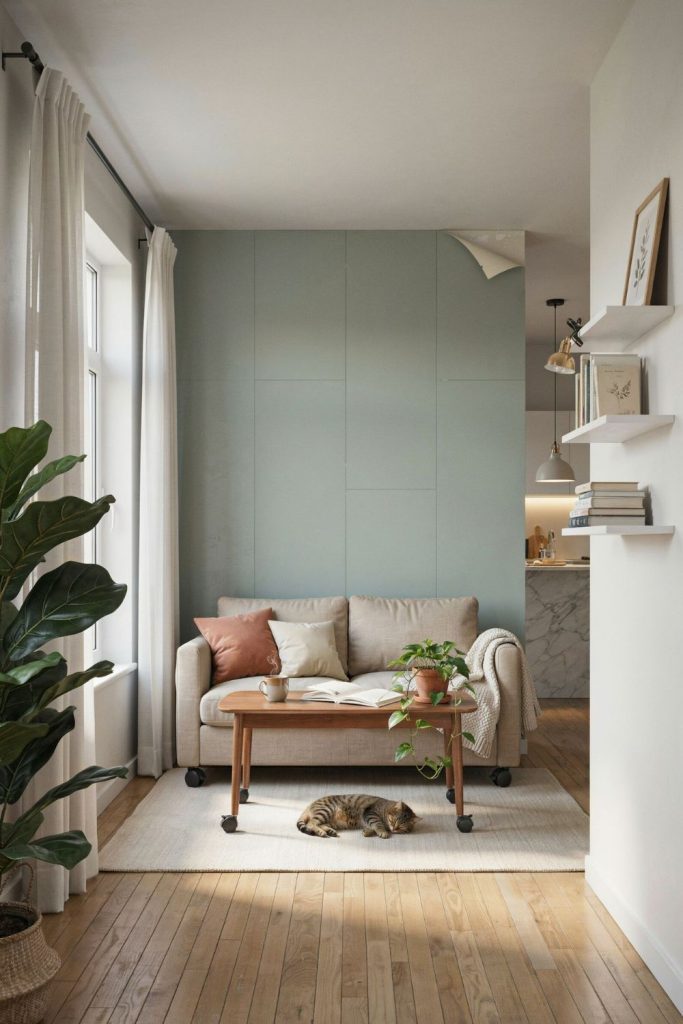
A small apartment living room comes with extra limits that a lot of decorating advice ignores, mainly no permanent paint changes and no structural adjustments. The good news is that almost none of the ideas above actually depend on either.
How to Style It:
- Use removable wallpaper or peel-and-stick tile in place of a painted accent wall
- Rely on furniture placement and lighting to define zones instead of built-in shelving
- Choose furniture on casters so you can adjust the layout without much effort
- Stick to tension rods, adhesive hooks, or Command-style hardware for mirrors and shelving
Small Living Room Decorating Ideas That Actually Move the Needle
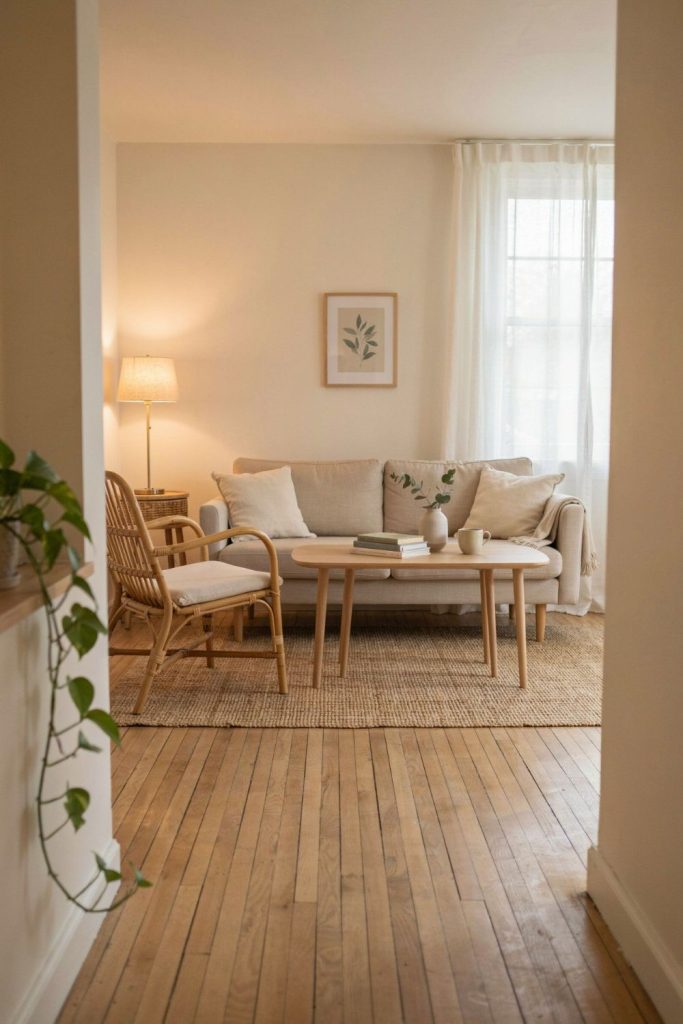
If you only do a few things this weekend, size your rug correctly, fix the lighting, and swap out one oversized piece of furniture for something lighter. Those changes do more for a small living room than a full color overhaul or a themed style redo ever will.
Small living room decorating ideas work best when you stop treating every tip as equally important and start with the ones that change how the room actually functions. Everything else, the accent wall, the style choice, the mirror placement, is finish work that matters, but only after the bones are right.
Frequently Asked Questions
What is the single biggest mistake in small living room decorating?
Buying a rug that is too small for the seating layout. It creates a disconnected feel that no amount of styling fixes afterward.
Do dark accent walls ever work in a small living room?
Rarely well. A muted, mid-tone color on the wall with the least furniture in front of it works better than anything dark or saturated.
Is bohemian decor a bad fit for small living rooms?
Not bad, only harder. It works best borrowed through textiles and rugs rather than layered furniture and wall art.
Should I avoid sectionals entirely in a small living room?
Not entirely, but anything much deeper than about 34 inches tends to overwhelm a small footprint. A loveseat or two lighter chairs is usually the better call.
How many mirrors does a small living room actually need?
One large mirror placed across from a window does more than several small decorative ones scattered around the room.
What is the easiest low-cost change to make first?
Fixing the lighting. A floor lamp and a table lamp in place of one overhead fixture changes the feel of the room immediately.
Can I use these ideas in a rental with no paint allowed?
Yes. Peel-and-stick options, furniture placement, and adhesive hardware cover almost everything on this list without needing permanent changes.